Tuesday, January 22, 2013

A Sequence in Elegance


Can be found here
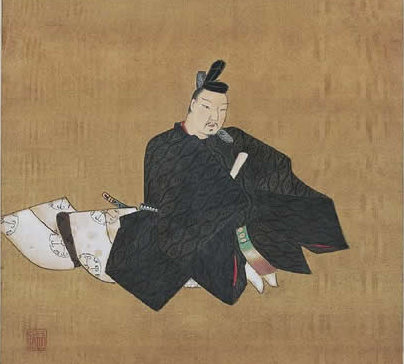
The poetry of what they call “Medieval Japan” is an interesting case. We’re talking about the time period during which the clans of samurai ruled over Japan before the “Early Modern” era with the Tokugawa Shogunate. In short, the sophisticated aristocratic culture that prevailed in Kyoto during the Heian Period (~800 A.D. to 1185 A.D.) was abruptly ended by the rise of the Minamoto clan and the Genpei war.

Can be found here
Poets such as Saigyo and Fujiwara no Teika lived during this tumultuous time and produced some of the most compelling works in the Japanese poetic canon. There was a aesthetic stagnation among the later Heian poets. I believe this was due to an over-emphasis on following the poetic formula and traditional aesthetics passed down by their innovative ancestors. Teika and Saigyo lived during a time of transition and thus were freshly stimulated by real turmoil and emotion.

After Teika and Saigyo’stime, poets during the age of the samurai had their wings clipped. They lost their previous prestigious position as the new rulers were not so interested in patronizing the arts. There was also the rise of Zen Buddhism which added a new dimension to the poetic landscape. There were several poetic anthologies that were compiled after Teika’s time but only a few are considered worthy of study. Too many poets of that time were trying hard to emulate the “golden age” poetry (from the Heian Period) that they sacrificed their creativity.
Can be found here
The next major breakthrough in Japanese poetry came with the popularization of renga (group poetry composition) and eventually the revolutionary haiku.
The following three poems are from the Fūgashū or the “Collection of Elegance”. It is a kind of depressing work but very sophisticated. It was compiled by Emperor Hanazono (1297-1398). I chose three poems in the order that Hanazono had chosen. I like this sequence, since although they were all composed independently, they form a sort-of narrative.
Enjoy!


空の色草木を見るもみな悲し命にかくるものを思えば

しんし内親王
When I look upon
The sky’s hue, or even the grass,
Sadness pains my heart,
As I ponder my fate,
Lost in my own destiny.

Princess Shinshi


もの思う心の色にそめられて目に見る雲も人や恋しき

京極為兼

Each one of my thoughts,
With the splendid tint of love,
Has been dyed.
Even the clouds I can see,
Make me think only of you.

Kyougoku Tamekane
 恋あまる眺めを人はしりもせじ我とそめなす雲の夕暮れ

花園天皇

Overwhelmed by love
I look to the evening sky,
Surely, she doesn’t know
That my heart has colored
This lingering sunset...

Emperor Hanazono


Tuesday, December 11, 2012

伊呂波歌


色は匂へど散りぬるを、我が世誰ぞ常ならむ。有為の奥山今日越えて、浅き夢見じ
酔ひもせず。

空海

Can be found here
いろはにほへとちりぬるをわがよたれそつねならむうゐのおくやまけふこえてあ
さきゆめみしゑひもせす

最近、私は伝統的な日本語の教科書を買い、本当に伝統的な日本語を勉強し始め
た。この教科書の始めで「伊呂波歌」という歌を見つけた。みんな日本人の学生
はこの歌が知ると思うけど、私はこの歌を読んだことがなかった。「伊呂波歌」
は全部の仮字を一回だけあるのに、面白い歌だから好きである。歴史によると、
とっくに空海(真言宗の開祖)はこれを書いた。

以下、私の英語の翻訳がある。

The colors of our world are brilliant and yet, they will inevitably fade into obscurity. Is there anybody immortal in this world of ours? Today I venture over the far away mountains of illusion. I wish not to be intoxicated with superficial dreams.

Kukai

Thursday, November 29, 2012

Minamoto no Sanetomo: Samurai with Pathos


Yoritomo no Minamoto
Can be found here
Minamoto no Sanetomo lived from 1192-1219 A.D., and was a son of the famous Minamoto no Yoritomo: founder of the Kamakura Shogunate. The Kamakura Shogunate was the first samurai controlled government (bakufu) in Japanese history. 
After Yoritomo's death, Hōjō Tokimasa, Sanetomo's grandfather, usurped all shogun powers and would then designate a figurehead Seii Taishogun as the head of state. Sanetomo assumed the role as Seii Taishogun  in 1203 at age eleven. His mother, Hōjō Masako was in fierce competition with Hōjō Tokimasa for power and influence. She used her son as a political tool to further her interests and protect herself. In 1204 his older brother Yoriie was murdered by a member of the Hōjō clan.
Minamoto no Sanetomo
Can be found here
Sanetomo realized early on that there was no hope to beat the powerful Hōjō clan and so devoted his life to poetry. He was tutored by the renowned Fujiwara no Teika. He studied poetry diligently as a way to escape the vulgar political reality he was forced into. 
Unfortunately, at the age of 28 Sanetomo was assassinated outside the Tsurugaoka Hachiman-gū shrine by his own nephew, son of Yoriie. The exact reasons behind of all this appear to be a mystery but it is clear there was something shady going on.
Sanetomo's poetry is very different from Fujiwara no Teika's and he flouted most of the poetic conventions ironed out before him. His waka has a very honest tone and is very direct. 
Tsurugaoka Hachiman-
Place of Sanetomo's Assassination
Can be found here


世の中は常にもがもな渚漕ぐ海人の小舟の綱手かなしも

実朝

Will this world of ours
Forevermore be the same?
Along the seashore
Seamen scull their tiny crafts,
Mooring rope...brings tears to m’eyes!

Minamoto no Sanetomo


This poem is from Fujiwara no Teika’s “100 Poems from 100 Poets” (hyakunin isshu). At first glance, the essentially mundane image of this poem seems undeserving of the strong emotional content. You would not expect this kind of outburst of pathos from a samurai. There are a lot of ways to interpret this poem. For most of his adulthood, Sanetomo feared for his life because of the political machinations of those around him. He may have projected his anguish on these fishermen as a cry for help, but I feel that this interpretation may be assuming too much.

            The structure of the poem reminds of how later haiku were written. Haiku are really just shortened waka, but there are conflicting theories on how exactly to interpret them. Some believe the value of haiku comes from the simplicity of a sudden “haiku moment”, which is then portrayed as a poetic “snapshot”, while others may appreciate the subtle pathos or literary allusions. In my opinion, some of the best haiku are merely depictions of simple scenes, be it from everyday life or snippets of nature. I mean, the most famous haiku of all time is about a frog jumping into a pond. The poem above has a simple scene, but Sanetomo explicitly adds the emotional content with a directness that is not characteristic of Japanese poetry.

秋はいぬ風に木の葉の散りはてて山さびしかる冬は来にけり

実朝
Can be found here

Autumn is no more,
The foliage of the trees,
Scattered by the wind,
The barren, lonely mountains
Beckon the coming winter.

Minamoto no Sanetomo

The interesting aspect of this poem is its directness. Sanetomo was a protégé of Fujiwara noTeika but apparently did not care much for his sensei’s ideas of yuugen (≈subtle beauty). This poem is quite simple and is anything but subtle. I do like it though precisely for its no nonsense approach to the nasty seasonal transition from autumn to winter.
Most Japanese poems describing the coming of winter will hint at “withered reeds” or “frosty dew” but certainly not “barren mountains”. Sanetomo apparently had little patience for the poetic conventions of his peers and I have to respect him for that. The other possibility is that he died too young to really develop a discerning aesthetic taste.

世の中は鏡に映る影にあれやあるにもあらずなきにもあらず

実朝
Buddhist art of Japan in 12th Century
Can be found here

Our existence
Is like a reflection
In a mirror.
It really does not exist,
But also doesn’t not exist.

Minamoto no Sanetomo

            This poem has a very Buddhist ring to it and demonstrates the heightened religiosity of the samurai in early medieval Japan. The paradox of our existence displayed in this poem is developed to a dizzying degree by later Zen philosophers. I like this poem, yet I’m not sure if it’s because I lack intellectual depth, but these kind of Buddhist paradoxes usually only bring forth in me a shallow “hmmmmm”.


空やうみ海や空とも見えわかぬ霞も波もたちみちにつつ

実朝

The sky, then the sea,
Or the sea on top of the sky,
I can no longer tell,
The mist and the waves rise
To an increasing crescendo.

Minamoto no Sanetomo


            I like this poem mainly for the nice imagery but also because the last line is just one word: tachimichinitsutsu. Try and say that five times fast.

大海の磯もとどろによする浪われてくだけて裂けて散るかも

実朝

From the wide sea,
Ocean waves boom and thunder
Across the coastline,
Smashing! Breaking! Cascading!
Then gently scattering.

Minamoto no Sanetomo

Can be found here
            This poem has very vibrant language which is again very uncharacteristic. The last two lines consist of three verbs in a row: warete (smash) kudakete (break) / sakete (≈break/ be smashed) chiru (scatter) ka mo. My translation shows a contrast between the waves “smashing” and then “gently scattering”, which may not be so obvious in the original poem. I did it this way because the final verb chiru does literally mean “to scatter” but it is usually used in the context of leaves or flower petals scattering, which I saw as a juxtaposition to the more violent verbs which preceded it. 

Tuesday, October 9, 2012

Fujiwara no Teika: Genius II


I came across a few more obscure poems from Fujiwara no Teika which I thought would be good to translate.  I devoted the last post to Teika and I will probably do several more to him since he more than deserves this iota of homage. 
Can be found here
One interesting thing about his life is that he began his poetic career a rebel and died a reactionary. He caused waves in the very rigid and hierarchical community of Japanese poetry with his audacity to break the norms and blaze his own path. He ruffled a lot feathers and it was during that period of his life that he showed the most creativity.
Towards the end of his life, his attitude changed greatly. He became more and more rigid with his proteges and became the same kind of person that he had tried to defeat during his ascendance to poetic artistry. I think there is a lesson here. The process of rebellion and thus creativity is essentially an ephemeral concept. The fallibility and weakness of the human spirit eventually will corrupt those deemed incorruptible. 

旅人の袖吹き返す秋風に夕べ寂しき山の架け橋
Can be found here

藤原定価

The traveler,
Sleeves flapping in the wind
On an autumn night,
How lonely the bridge
Across the gorge.

Fujiwara no Teika

I took a couple liberties when translating this poem but I believe the essential meaning has been preserved. The actual poem reads "秋風" or akikaze which literally means "autumn wind". It is a recurring image in waka and has a solemn connotation. I instead constructed a scene around an "autumn night" which in my opinion is better because "autumn wind" doesn't have the same feeling of loneliness like: "Wind blowing in an autumn night." 

招くとて草の袂の会もあらじとわれぬ里の古き籬は

藤原定価
Can be found here

Blades of grass, like sleeves
Futilely beckon to the house,
For this humble home
Has long been neglected,
A decrepit fence, roughly woven.

Fujiwara no Teika

This poem comes from a very obscure anthology called Shuuigusou which I could hardly find any mention of on the internet. This poem also has got a lonely tone and I think it fits well with the preceding poem. There is nothing to complicated or profound about it in my opinion, but I just like the imagery.


今宵ばかりや枕さだめぬ;

頼めこし夢のただちは現似て

藤原定価
Can be found here

Tonight, only tonight
Let us share this pillow,

I’ve always relied
On the honesty of my dreams
As though it was reality.

Fujiwara no Teika

This poem is actually part of renga sequence compiled after his death called Tsukuba-shuu. This is about as openly erotic poetry was at this time. You have to wait for the rebellious haiku and renga poets later for something more explicit. Anyway, I like this poem because of the juxtaposition of them "sharing a pillow" in real life and his mention of the fallibility of his sense of reality. It's like he might not even know that he is dreaming. 

Saturday, September 22, 2012

Fujiwara no Teika: Genius

My next few posts will be dedicated to my favorite waka poet: Fujiwara no Teika. He lived from 1162-1241 A.D. and it is difficult for me to single out a more influential and important poet in the Japanese poetic tradition. He was the son of the illustrious Fujiwara no Shunzei, and he was keen to rebel against the established system, and chart his own poetic course. Teika created his own brand of poetry and utilized completely new and controversial techniques. He also compiled the famous Hundred Poems by a Hundred Poets which inspired the famous Japanese card game karuta.
Can be found here

He was very keen on honkadori which is when a poet uses allusions to previous great works. In essence it is a practice of "cutting and pasting" and I do think it is a bit vulgar, but one of my favorite poems utilizes this technique. He's also famous for using yoen which is a concept similar to Shunzei's yugen but with increased elegance. Teika also used another ideal known as ushin or "sincerity of feeling" which was a style marked with a strongly subjective tone. My understanding of it is that ushin really denotes a sense of poetic honesty combined with mellifluous language.
Overall Fujiwara no Teika was the most compelling waka poet and I think it's fitting that waka essentially declined as an art form after his death. He was the pinnacle and I will explore and translate as many poems from him that I have time for. 


まぼろしよ夢ともいわじ世の中は斯くて聞きみるはかなさぞこれ

藤原定家

A mere ghost!
I’ll not call it dream,
Idle chatter, and beauty
Faded in ephemerality,
Is what our world is made of.

Fujiwara no Teika

This is a beautiful poem and has an interesting syntax which comes of as adversarial. This was composed when he was younger and a bit of an iconoclast. 

Can be found here


ひととせを眺め尽くせる朝戸出にうすゆき氷る寂しさの果て

藤原定価

I’ve spent a year
Gazing at the outside world
One morning, I open the door,
The ground is frozen with light snowfall,
The bounds of loneliness...

Fujiwara no Teika

I like the solemness of this poem.

Can be found here.


わが身よにふるともなしの眺めして幾春風に花の散るらん

藤原定価

As I watched the long rains
I became less and less aware
Of my aging body,
I wonder, how many times
Have the blossoms been scattered by the spring wind?

Fujiwara no Teika

This poem is actually and allusion to a famous poem from Ono no Komachi. I translated the Komachi poem on this page.

Monday, July 9, 2012

Six Best Waka Poets


In Ki no Tsurayuki's preface to the Kokinshuu he listed six waka poets that he considered to be the best in history. They are Kisen, Ono no Komachi, Archbishop Henjo, Ariwara no Narihira, Fun'ya no Yasuhide, and Otomo no Kuronashi
The old geezer himself


Ki no Tsurayuki had a unique critique for each of these poets: 
Kisen: "The priest of Mt. Uji, Kisen, is obscure, and his beginnings and endings do not chime; he is like an autumnal moon, bright in the evening, dim at dawn."
Ono no Komachi: "As to Ono no Komachi, she has pathos but lacks power, like a fair but feeble woman."
Archbishop Henjo: "Sojo Henjo, whose manner is successful, but his work is deficient in truth, like the picture of a beautiful woman that excites emotion, but to no avail."
Ariwara no Narihira: "Arihara Narihira, very full of feeling but poor in diction; his poetry reminds one of a faded flower that yet preserves some of its perfume."
Fun'ya no Yasuhide: "Funya no Yasuhide, on the other hand, is an artist in words; with him form is better than substance. He is like a peddler dressed up in fine silks."
Otomo no Kuronashi: "Otomo no Kuronushi, lastly, has a pretty turn for verse, but his form is poor; he is like a faggot-bearing boor resting under a blossom-filled cherry-tree."


I don't entirely agree with all of what Ki no Tsurayuki says but you have to listen to him since he is the authority on this stuff. I think it's funny that Ki no Tsurayuki lists these guys as the Six Best Waka Poets and then ridicules them in preface and gives only lack-luster compliments. Maybe it's an extension of Japanese modesty. 
I translated one poem from each of the six poets. I'm not sure they all represent what Ki no Tsurayuki described but who really cares about that old geezer. 

Can be found here
わが庵は都のたつみしかぞすむ世をうぢ山と人はいふなり

喜撰法師

My hermitage lies
Southeast of the capital,
I dwell with the deer
On this mountain and yet
I still feel sadness for the lives of men.

Kisen


Kisen is a poet I know very little about but I have always enjoyed poetry from Buddhist monks. This poem is not bad and some interesting wordplay around the Japanese word for deer: "shika". 

花の色はうつりにけりないたづらにわが身世にふるながめせしまに

小野小町
Can be found here

The flower’s beauty
Has passed already,
Vacantly I gaze
At the unending spring rain
As my life vainly drips by.

Ono no Komachi

I really like this poem because Ono no Komachi really hits that note of transience the Japanese are so big on. Withering flowers or falling cherry blossoms are the images used so much by Japanese poets to express their sadness with the ephemeral world while simultaneously basking in its beauty.

Can be found here
あまつかぜ雲のかよひぢ吹きとぢよ乙女のすがたしばしとどめむ

遍照

The heavenly winds
Push drifting clouds across the sky,
Let the gale cease
So I might get a few more moments
With that celestial maiden.

Archbishop Henjo

Henjo is being his majestic self again. I do disagree with Ki no Tsurayuki in saying that Henjo's poetry is "deficient in truth". I would say Henjo's poetry has the depth and truth of other great poems. 

Can be fouund here


ちはやぶる神代もきかず龍田川からくれなゐに水くくるとは

在原 業平

From the age of Gods
When the Earth was torn asunder
I never heard of
Tatsuta River gleaming
With this deep, crimson hue.

Ariwara no Narihira

The first line of this poem is a reference to the Manyoushuu which is the first and quite ancient, famous Japanese poetry anthology. The Tatsuta River is depicted to the right and Tatsuta (the place) is famous for its autumn landscapes. During autumn this tree usually was red with the falling leaves but this poem uses a bizarre word for red or crimson. The term "karakurenawi" which is the fourth line in the Japanese, refers to a hue of crimson that had to be imported from continental Asia. So perhaps he is lamenting the influx of foreign influences in Japan.

Can be found here
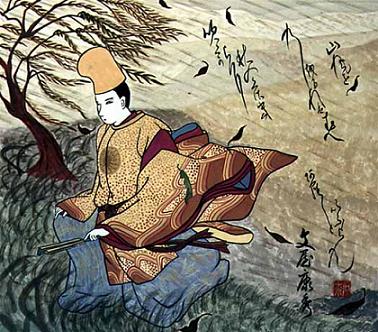
草も木も色かはれどもわたつうみの波の花にぞ秋なかりける

文屋康秀

The trees and grasses
Have changed color and yet,
The bright, white blossoms
Of the ocean’s waves remain
Unchanged, as if autumn’ll never come.

 Fun'ya no Yasuhide

I like this poem because it is kind of cute. In this case I think Ki no Tsurayuki might be right when he says Fun'ya no Yasuhide "is an artist in words; with him form is better than substance. He is like a peddler dressed up in fine silks."

何せむにへたのみるめを思ひけむ沖つ玉藻をかづく身にして

大友黒主
Can be found here

She combs the beach
Looking for precious seaweed,
Waist deep in the sea,
She humbly scavenges,
Why do I love her so?

Otomo no Kuronashi


This poem was particularly difficult for me to translate and is more of a work in progress.

Friday, July 6, 2012

Fun'ya no Yasuhide: Tricky Dick


Can be found here

Fun’ya no Yasuhide is a less well-known waka poet but he is listed as one of Ki no Tsurayuki's Six Best Waka Poets. There are only a couple of details from Yasuhide's life that we know. First, he died in 885 A.D. which makes him one of the founding fathers of waka. He also apparently had an affair with Ono no Komachi. That's about all we know. He has only 5 poems featured in the Kokinshuu so even if he was so respected he may have only contributed a small amount of work. Ki no Tsurayuki described his poems as having style but lacking in content. I have neutral opinion on this. His poetry does have some nice wordplay but can also be quite deep. As always these are all my translations. Enjoy!

春の日の光にあたる我なれどかしらの雪となるぞわびしき

文屋康秀

The warming light
Of spring sunshine
Is not enough
To melt the frosty snow
Upon my head.

Fun’ya no Yasuhide

This poem contains the metaphor "かしらの雪" which literally means "head snow". Snow on one's head refers to gray hair which of course represent old age. The poem was apparently written as a reaction to a very young crown prince taking the reign as the emperor of Japan and even the blessing from a such a youthful emperor ("warming light of spring sunshine") was not enough to "melt" the gray hair from his head. 

吹くからに秋の草木のしをるればむべ山風をあらしといふらむ

文屋康秀

Suddenly the wind blows,
The trees and grasses wither
On this autumn day,
Indeed those mountain winds
Wreak havoc like a storm.

Fun’ya no Yasuhide

 This poem is interesting because of its intriguing wordplay and it is featured in Fujiwara no Teika's Hyakuninisshu or"Hundred Poems from a Hundred Poets.In the poem, "山風", yamakaze, literally means "mountain wind" but then look at the character for storm: "" arashi. It is really a combination of the two characters. The last line of the poem reads: "arashi to ifuramu" which means something like "It is indeed called a storm." So the mountain wind alludes to a storm but then there is further wordplay because arashi also means "havoc" or "disaster".